
DR Congo: Engage Communities in Ebola Response
(Kinshasa) – The Congolese government and international partners should prioritize community engagement and limit the role of security forces in responding to the Ebola outbreak in eastern Democratic Republic of Congo, Human Rights Watch sa
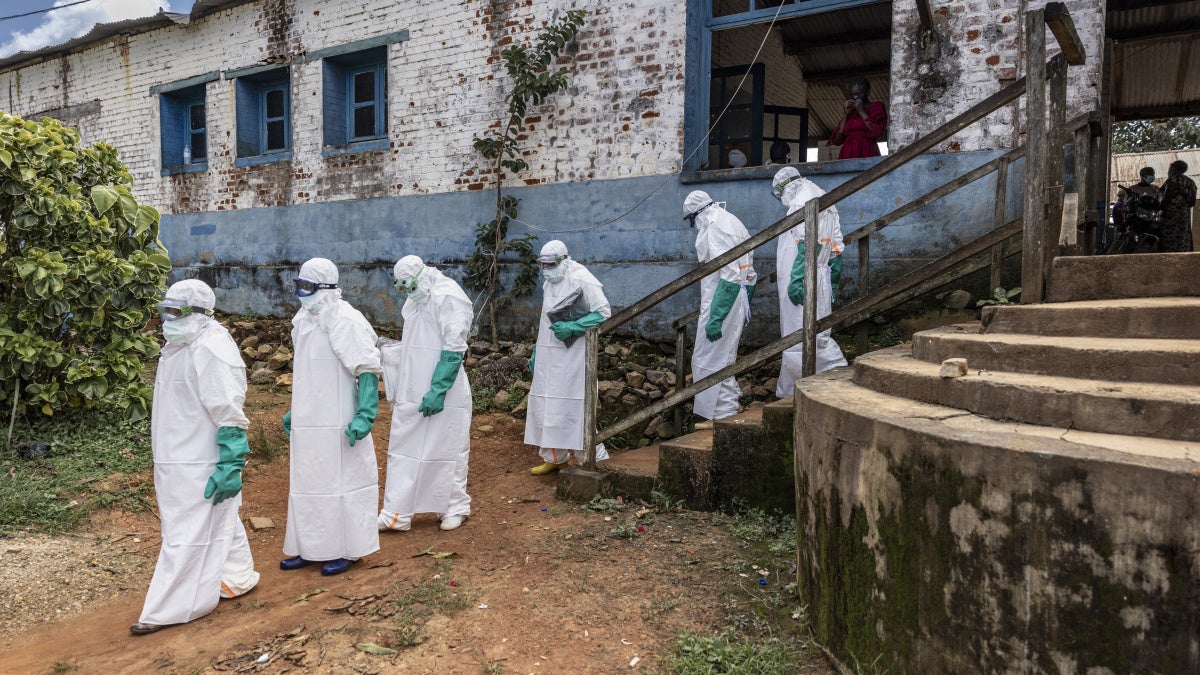
(Kinshasa) – The Congolese government and international partners should prioritize community engagement and limit the role of security forces in responding to the Ebola outbreak in eastern Democratic Republic of Congo, Human Rights Watch said today. “The Congolese government and its partners need to overcome years of conflict, abuse, and neglect that have strained healthcare systems and eroded trust and that risk complicating the Ebola response,” said Ida Sawyer, Crisis and Conflict director at Human Rights Watch. “That means taking all necessary steps to minimize the role of security forces and closely engaging with affected communities.” Human Rights Watch in May and June 2026 interviewed nine humanitarian workers and public health experts involved in the current and previous Ebola outbreaks.
The World Health Organization (WHO) on May 17 declared the Ebola outbreak a “public health emergency of international concern.” The Bundibugyo Ebola virus, a strain with no vaccine or approved treatment and a fatality rate of up to 50 percent, had been spreading undetected for months.
The Trump administration’s dismantling of the US Agency for International Development (USAID) in 2025, compounded by years of underfunding of the humanitarian response in eastern Congo, may have contributed to the delay in detection of the virus and response systems. As of June 6, the WHO reported 515 confirmed cases in Congo, including 91 deaths, and 19 confirmed cases and 2 deaths in neighboring Uganda. Ebola spreads through contact with the bodily fluids, causing fever, severe headaches, muscle pain, vomiting, diarrhea, hemorrhaging, and death. Women face disproportionate risks of exposure due to their roles as caregivers and health workers.
The ritual washing of bodies before burial can contribute to transmission and requires careful, culturally informed, public health outreach about safe practices. Inadequate personal protective equipment has put health workers at risk and can drive transmission. The 2018-2020 outbreak killed 2,299 people. Hostilities prevented effective disease surveillance, tracing, and treatment, which are crucial for treating this type of outbreak and created what the WHO called a “perfect storm.” The involvement of Congolese security personnel during the 2018-2020 outbreak hindered the health response, politicized care, and deepened mistrust among affected communities, Human Rights Watch said. Armed groups also capitalized on the influx of funding, creating what local communities described as “Ebola business.” The Congo Research Group, an independent organization, reported in 2021 that parties to the conflict exploited the outbreak for material gain, creating incentives to impede the healthcare response.
The current outbreak is concentrated in Ituri province, where mass displacement and a healthcare system degraded by years of conflict have created high-risk conditions for the rapid spread of Ebola. Armed groups and government security forces previously targeted hospitals, clinics, and healthcare workers, and looted medical supplies. A May 2026 report by the Safeguarding Health in Conflict Coalition, an international group of nongovernmental and academic organizations,found that there were 325 reported attacks on health in Congo in 2025—mostly in the east—nearly triple the 2024 total. In May 2026, humanitarian organizations in Ituri warned that persistent insecurity was impairing the delivery of aid and the provision of health services. Attacks by residents on Ebola care facilities in the towns of Rwampara and Mongbwalu in Ituri on May 21 and 22 reflected local distrust in the public health response. Armed groups in Ituri have repeatedly committed mass killings of civilians and other abuses with impunity. In a long-running intercommunal conflict over land and resources, the Coopérative pour le développement du Congo (Cooperative for the Development of Congo, or CODECO), has attacked civilians, primarily the Hema ethnic group. Just weeks before the outbreak was announced, CODECO forces reportedly killed 50 civilians near Pimbo in Ituri’s Djugu territory.
The Islamic State-affiliated Allied Democratic Forces (ADF) have also killed numerous civilians, including up to 60 people in southern Ituri in early 2026. The Congolese armed forces have been responsible for serious abuses, which Human Rights Watch has documented. Both the UN Group of Experts on the Democratic Republic of Congo and International Peace Information Service reported that the Congolese government is involved in unlawful gold trafficking in the region in collaboration with armed groups. The urgent need for increased funding and other assistance—trained personnel, medical supplies, and expanded testing capacity—needs to incorporate transparency about resource allocation and distribution and effective communications with affected communities. It is important for the UN peacekeeping mission in Congo, MONUSCO, to maintain its civilian protection role and for the WHO to coordinate closely with the mission. Evidence from past outbreaks shows that community engagement and social support measures such as food aid and home-based care can be more effective than coercive containment measures and can help build the trust needed for an effective response. As of November 2025, emergency levels of acute malnutrition had been recorded in parts of Ituri and North Kivu, and nearly 25 million people faced high levels of food insecurity between September and December 2025, with conditions expected to worsen in 2026. People are more likely to comply with voluntary quarantine if they have adequate food. When treatment centers cannot provide basic sustenance, family members risk exposure by bringing food themselves.
The US government on May 28 announced US$112 million in emergency assistance to Congo, but it is going into a system that was dismantled in recent years by aid cuts by multiple donors.
The US government cut emergency response aid to Congo by more than half between 2024 and 2025, from $805 million to $373 million. One local doctor told Physicians for Human Rights that they were “no longer truly able to carry out proper epidemiological surveillance because of the disruption in USAID funding.” A former senior USAID official who oversaw the agency’s response to past infectious disease outbreaks told Human Rights Watch that previously “USAID invested in making sure you had the people, logistics, and operational support to activate when outbreaks occur. Those investments are no longer there, so the systems were not positioned to be activated.” Grace Tran, who worked on Ebola preparedness with USAID during the 2018 outbreak, said that the cuts eliminated many of the community outreach programs critical in a conflict setting: “A lot of the trust that we built disappeared.” The US withdrawal from the WHO in January compounded the damage, severing real-time data-sharing and compelling the WHO to cut nearly a quarter of its staff.
The United States was absent from the WHO’s World Health Assembly in Geneva in May, where world leaders discussed a global response to the outbreak. On the withdrawal from the WHO, the former senior USAID official told Human Rights Watch: “Lack of coordination causes death. And our failure to coordinate is killing people.” “The Ebola outbreak in a region ravaged by atrocities and years of neglect, compounded by major cuts to global health funding, has created a humanitarian catastrophe,” Sawyer said. “Donor countries and international organizations should urgently respond to the outbreak and ensure funds are spent effectively and accountably.” Intercommunal Violence in Ituri and Abuses by Warring Parties Ituri has experienced cycles of intercommunal violence between armed groups claiming to represent the interests of different communities, as well as government forces.
The conflicts are driven by longstanding tensions over land, competition for natural resources, poor governance, and foreign intervention. In November 2025, Human Rights Watch interviewed 119 people about the armed conflict in Ituri and North Kivu provinces.
They included survivors of killings, sexual violence, and forced displacement, as well as witnesses to abuses, government and military officials, and humanitarian organization representatives.
The most recent cycle of violence began in 2017, when the suspected killing of a prominent priest from the Lendu community led to accusations that another community, the Hema, were attempting to kill Lendu leaders. A group claiming to represent the Lendu, the Cooperative for the Development of Congo (CODECO), initiated much of the ensuing violence. A series of attacks and reprisals between the Lendu and Hema communities resulted in the Hema forming a “self-defense” group known as Zaïre, which has attacked government forces, other armed groups, and Lendu civilians. In January 2025, Thomas Lubanga established an armed group called the Convention for Popular Revolution (CRP) in Uganda. Lubanga was the leader of a largely Hema armed group responsible for grave abuses between 2001 and his arrest in 2006. Lubanga was convicted in 2012 by the International Criminal Court for recruiting and using child soldiers and was released in 2020. While the CRP claims to represent all Iturians, the introduction of a Hema-led armed group founded in Uganda significantly increased tensions in Ituri. On February 9, 2025, CODECO fighters attacked an internally displaced persons camp in Djaiba, killing a woman and injuring 10 others.
The next night, CODECO fighters attacked the village of Lindo and surrounding villages, killing at least 48 people. Witnesses told Human Rights Watch, and the UN Group of Experts on the Democratic Republic of the Congo reported, that CODECO fighters killed over 80 civilians in villages surrounding the Djaiba camp between February 9 and 11. A witness said: “We were in the house when they arrived. We heard people trying to break down our neighbors’ doors. Our door is strong – they couldn’t break it, but they tried. I was in the house with about 13 people; everyone had fled from the [Djaiba] site to take shelter. We were able to stay there until morning. But all our neighbors were killed.... We heard the screams of the people who were set on fire. When we left the house in the morning, we saw the bodies of the others, and we fled to the bush.” A woman said that CODECO fighters killed five of her six children.
They broke down the door of the house where the family was staying. She and other residents scrambled to barricade themselves in the bedroom. CODECO fighters shot and killed two of her sons, 6 and 8, and her 15-year-old daughter, she said.
They struck her three youngest children with machete blows, killing her 6-month-old baby boy and 4-year-old daughter. Her only surviving child, a 3-year-old boy, was seriously wounded. She said that her son is still traumatized. “Every time I prepare food and call [my son] to eat, he refuses,” she said, more than nine months after the attack. “He says, ‘If you want me to eat, first call my brothers so I can eat with them....’ I can’t leave the house to look for work. Every time I leave, my neighbors say he cries all day and refuses any food.” The CODECO attack appears to have been in response to a February 8 attack on the village of Arr by Zaïre fighters.
The fighters burned homes and killed five civilians, including two children, said a local leader, and which the UN reported. Further attacks took place in nearby Pimbo on April 28. Local sources said the CRP attacked a Congolese army position in Pimbo, killing about 15 people, including 2 women living in the camp with their husbands. Around the same time, CRP and CODECO forces clashed, and MONUSCO evacuated 191 civilians. Al Jazeera reported that 50 civilians were killed during the fighting. Human Rights Watch has been unable to independently corroborate casualty numbers. Abuses by the Allied Democratic Forces The ADF grew out of an Islamist rebellion in Uganda that was pushed into northeastern Congo by the Ugandan military in 1995. In 2015, the group’s leader, Jamil Mukulu, was arrested in Tanzania, and his successor, Musa Baluku, pledged allegiance to the Islamic State (ISIS) in 2017. ISIS has claimed responsibility for attacks by the ADF and provides them with funding. Under Baluku’s leadership, attacks against civilians have increased. According to military and UN sources, as well as witnesses, one ADF group led by a Tanzanian national Ahmad Mahmood Hassan, known as Abuwakasi, was responsible for two massacres in northeastern Congo in late 2025 that killed nearly 100 civilians. On September 8, the ADF killed at least 70 people in the village of Ntoyo in North Kivu province.
The fighters burned vehicles and houses and killed civilians. A 35-year-old resident said that she was at the wake for her brother-in-law when the fighting began: “They came into the house, and they brought people inside. I fled, and when I got outside some of them grabbed me and tied my hands.... I realized that the people inside the house were being killed...
There was gunfire, and one of the bandits said to me, ‘Mama you are lucky, I’m going to free you.’ After they untied me, I fled to the valley, where I spent the night.” When she returned the next morning, she found dozens of bodies. Some, including her 85-year-old mother and 40-year-old brother, appeared to have been killed with hammers. Others appeared to have been shot or killed with machetes.
The ADF had set fire to the house, possibly burning people alive, she said. She is the sole member of her family to survive. Witnesses said that the Congolese army did not arrive in Ntoyo until after the massacre had ended, which an army spokesperson, Lt. Marc Elongo, confirmed. On the night of November 14, the ADF attacked the village of Biambwe, 30 kilometers east of Ntoyo, also in North Kivu. Two witnesses said that fighters killed 28 civilians, including 17 at a Catholic church-run health center. A nurse said that the ADF attacked the maternity ward, killing mothers who had just given birth. “We heard knocking on the doors and the women started crying in the maternity ward. We opened the door [of the staff room] and a pregnant woman came in and told us they were people killing in the maternity ward.” In recent years the ADF has abducted hundreds of women and girls, often forcing them to “marry” ADF fighters and subjecting them to sexual slavery. Some escaped after being held captive for months or years, while others remained in the armed group’s custody. Human Rights Watch interviewed six women who were held for up to four years at ADF camps. Most had been abducted during attacks on their villages or farms, when fighters killed their male relatives, sometimes in their presence. An 18-year-old woman said: “In the camps, if they ever discovered that you wanted to escape, you would be executed. When they kill someone, they call everyone to witness it. I saw them kill a woman who was around 20 years old.
They cut her head off with a machete, and then they threw the body in the river.” Another woman said the ADF abducted her when she was 14.
The ADF attacked her village in Beni territory, North Kivu, killed her brother-in-law in front of her, and abducted her and her sister-in-law.
They held her for four years. She was forced to “marry” a Congolese fighter: “During these four years, it was a life of pure suffering.
The husband they gave me was recruited by the ADF.
They said they had to do work for him, but when we got there, we found out his work was to kill people. He had expectations of me; he wanted me to have his child. One day, when we were in bed, he said he would kill me because he wanted to have a child with me and I wasn’t getting pregnant.” She escaped by slipping out of the camp at night while the man was asleep. She walked for five days before people took her to the hospital in Beni, where she received medical treatment and psychological support. Violations by Congolese Government Forces Armed groups have used the security vacuum in northeastern Congo to commit rampant abuses against the civilian population, as the Congolese military redeployed many of its forces to fight against the Rwanda-backed M23 armed group. Congolese armed forces remaining in the northeast often pose a threat to the civilians that they have a responsibility to protect. In 2025, Human Rights Watch documented sexual violence committed by Congolese army personnel in northeastern Congo, interviewing survivors including a 17-year-old girl who said that four soldiers severely beat and raped her in April 2025 in Djugu territory: “They said if I didn’t agree to have sex with them, they would kill me. Some grabbed my arms.
They beat me, they had sticks.
They beat me with those and with their hands.” Congolese soldiers have also frequently sold weapons and engaged in illicit commercial activities such as gold trafficking often in collaboration with armed groups. A 2025 report from the UN group of experts highlighted that at the start of 2025, almost all gold mining sites in Ituri were controlled by CODECO and Zaïre. During the next six months, CODECO dislodged Zaïre forces from important gold mining areas. A July 2025 UN report, as well as two gold miners interviewed by Human Rights Watch, said that much of this gold is exported to Uganda and Rwanda. International Response Financial cuts to the UN peacekeeping mission, MONUSCO, have impeded civilian protection efforts. In 2023, Congolese President Félix Tshisekedi ordered MONUSCO to fast-track a planned withdrawal from Congo. While MONUSCO did withdraw from South Kivu, the withdrawal was reconfigured into a slower, phased approach due to fears over a security vacuum and the conflict with the M23 armed group. Broader cuts to UN funding, however, have forced the mission to close operating bases and relocate troops, including in Ituri province. Those responsible for grave international crimes are rarely held to account, as domestic justice efforts face serious challenges, including inadequate resources and capacity, corruption, and a lack of political will, especially with respect to abuses implicating senior officials. International efforts to secure accountability in Congo, such as the UN Fact-Finding Mission on the situation in the South and North Kivu provinces of the Democratic Republic of Congo and the Independent Commission of Inquiry on the Human Rights situation in the South and North Kivu Provinces of the Democratic Republic of Congo, do not include Ituri province, and the International Criminal Court’s investigation in Congo currently focuses on North Kivu. Similarly, peace talks in Washington, DC, Doha, and Lomé have focused almost exclusively on the M23 conflict and relations between Congo and Rwanda. Recommendations The Democratic Republic of Congo should: The Congolese government and international partners should: Partner countries and international organizations should: .
Read the full article at the original website
References:
- https://www.hrw.org/africa/democratic-republic-congo
- https://www.hrw.org/about/people/ida-sawyer
- https://www.who.int/news/item/17-05-2026-epidemic-of-ebola-disease-in-the-democratic-republic-of-the-congo-and-uganda-determined-a-public-health-emergency-of-international-concern
- https://www.nature.com/articles/s41467-026-73746-1
- https://www.theguardian.com/global-development/2026/jun/03/drc-ebola-outbreak-could-have-begun-as-early-as-january-who-chief-says?CMP=Share_iOSApp_Other
- https://humanitarianaction.info/plan/1509
- https://www.statnews.com/2026/05/19/us-aid-cuts-hamper-drc-ebola-response/
- https://www.who.int/emergencies/disease-outbreak-news/item/2026-DON606
- https://www.cdc.gov/ebola/causes/index.html
- https://www.hrw.org/news/2014/09/15/west-africa-respect-rights-ebola-response
- https://pmc.ncbi.nlm.nih.gov/articles/PMC8379334/
- https://pmc.ncbi.nlm.nih.gov/articles/PMC5656048/
- https://www.nature.com/articles/s41598-022-09564-4
- https://news.un.org/en/story/2018/09/1020392
- https://www.congoresearchgroup.org/en/2022/01/03/report-rebels-doctors-and-merchants-of-violence-how-the-fight-against-ebola-became-part-of-the-conflict-in-eastern-drc/
- https://s44308.pcdn.co/wp-content/uploads/2022/02/report-ebola-crg-rebels-doctors-and-merchants-of-violence-how-the-fight-against-ebola-became-part-of-the-conflits-in-eastern-drc-en-2.pdf
- https://www.reuters.com/business/healthcare-pharmaceuticals/congo-says-number-confirmed-ebola-cases-rises-282-2026-05-31/
- https://www.pnas.org/doi/10.1073/pnas.1913980116
- https://insecurityinsight.org/wp-content/uploads/2025/04/2024-SHCC-Annual-Report.pdf
- https://insecurityinsight.org/wp-content/uploads/2026/04/2025-SHCC-Annual-Report.pdf
- https://reliefweb.int/report/democratic-republic-congo/drc-protection-analysis-update
- https://www.aljazeera.com/news/2026/5/24/attacks-on-ebola-centres-intensify-in-eastern-drc-amid-outbreak-fears
- https://www.hrw.org/news/2025/08/06/dr-congo-armed-group-massacres-dozens-in-church
- https://www.aljazeera.com/news/2026/5/10/rebel-fighters-kill-at-least-69-people-in-northeastern-dr-congo
- https://monitoring.bbc.co.uk/product/b0002s5b
- https://www.longwarjournal.org/archives/2026/03/analysis-the-islamic-states-targeting-of-a-chinese-mine-in-congo-proves-the-group-is-a-resilient-threat.php
- https://www.aljazeera.com/news/2026/4/2/at-least-43-people-killed-in-adf-attack-in-northeast-dr-congo-army-says
- https://www.hrw.org/news/2026/01/12/dr-congo-surge-in-conflict-related-sexual-violence
- https://digitallibrary.un.org/record/4085466?v=pdf
- https://ipisresearch.be/wp-content/uploads/2023/10/IPIS_Armed-groups-territorial-control-land-disputes-and-gold-exploitation-in-Djugu_508.pdf
- https://pmc.ncbi.nlm.nih.gov/articles/PMC4674104/
- https://www.ipcinfo.org/ipc-country-analysis/details-map/en/c/1159775/?iso3=COD
- https://www.ipcinfo.org/fileadmin/user_upload/ipcinfo/docs/IPC_DRC_Acute_Food_Insecurity_Sep2025_Jun2026_snapshot_English.pdf
- https://www.nytimes.com/2026/05/30/world/africa/ebola-epicenter-congo.html
- https://www.state.gov/releases/office-of-the-spokesperson/2026/05/ebola-response-update-may-28-2026
- https://humanitarianaction.info/plan/1509?bs=eyJibG9jay03ODRkMDlhMS00MGE3LTQ4MzUtYWYxMi1jOTExMjk4MGQ2MzIiOnsidGFyZ2V0IjoxfX0%3D
- https://foreignassistance.gov/
- https://www.reuters.com/business/world-at-work/who-lose-quarter-its-workforce-by-mid-2026-document-shows-2025-11-18/
- https://news.un.org/en/story/2026/05/1167539
- https://www.who.int/news-room/speeches/item/who-director-general-s-address-to-member-states-at-the-79th-world-health-assembly---19-may-2026
- https://www.crisisgroup.org/rpt/africa/democratic-republic-congo/292-dr-congo-ending-cycle-violence-ituri
- https://www.trtworld.com/article/12786262?_rt=1
- https://www.hrw.org/news/2023/07/24/dr-congo-deadly-militia-raid-ituris-displaced
- https://adf-magazine.com/2025/09/new-militia-joins-violent-mix-in-troubled-eastern-drc/
- https://www.icc-cpi.int/drc/lubanga
- https://docs.un.org/en/s/2025/446
- https://www.msf.org/drc-new-wave-violence-deepens-humanitarian-crisis-ituri
- https://www.ecoi.net/en/file/local/2127798/n2512440.pdf
- https://actualite.cd/2026/04/28/ituri-des-affrontements-armes-signales-pimbo-apres-une-attaque-de-la-crp
- https://www.csis.org/blogs/examining-extremism/examining-extremism-allied-democratic-forces
- https://extremism.gwu.edu/sites/g/files/zaxdzs5746/files/2023-06/fatal-transaction-final_0.pdf
- https://www.reuters.com/world/africa/rebels-linked-islamic-state-kill-least-61-east-congo-funeral-2025-09-09/
- https://apnews.com/article/congo-adf-extremists-beni-lubero-47898b84ed0b257c235c49d5e485c223
- https://acleddata.com/report/m23-rebels-take-hold-eastern-congo-islamic-state-capitalizing-chaos
- https://www.hrw.org/news/2026/06/10/dr-congo-rwanda-m23-forcibly-recruit-detain-thousands
- https://www.aljazeera.com/news/2023/9/21/dr-congo-president-says-un-peacekeepers-to-begin-withdrawal-this-year
- https://www.uprights.org/wp-content/uploads/2025/04/DRC_publication_FR_DIGITAL_sans-photo.pdf
- https://www.ohchr.org/en/hr-bodies/hrc/ffm-drc/index
- https://www.ohchr.org/en/hr-bodies/hrc/coi-drc/index
- https://www.icc-cpi.int/news/statement-icc-prosecutor-karim-aa-khan-kc-situation-democratic-republic-congo-and-renewed
- https://www.state.gov/releases/office-of-the-spokesperson/2025/12/signing-of-the-washington-accords-for-peace-and-prosperity-between-the-democratic-republic-of-the-congo-and-rwanda
- https://www.peaceau.org/en/article/joint-statement-on-the-fifth-joint-oversight-committee-for-the-peace-agreement-between-the-democratic-republic-of-the-congo-and-the-republic-of-rwanda
- https://au.int/en/pressreleases/20260116/auc-chairperson-remarks-coherence-consolidation-peace-process-drc
- http://www.refworld.org/docid/45139c394.html