
Germany: Government Curbing Freedom of Information Act
(Berlin, July 8, 2026) – The German government should abandon its plans to gut Germany’s Freedom of Information Act, Human Rights Watch said today. The proposed amendments will threaten core human rights essential to transparency and public
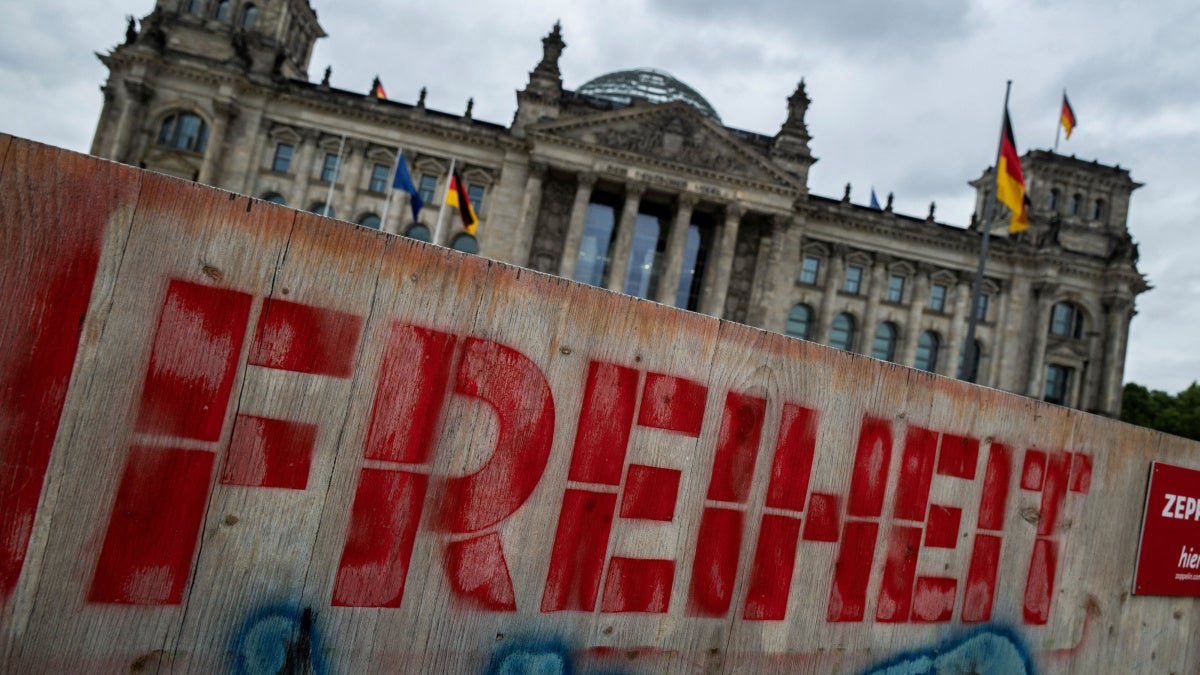
(Berlin, July 8, 2026) – The German government should abandon its plans to gut Germany’s Freedom of Information Act, Human Rights Watch said today.
The proposed amendments will threaten core human rights essential to transparency and public participation in a democracy based on the rule of law. On July 2, 2026, the coalition committee of the German government, comprised of the Christian Democratic Union/Christian Social Union (CDU/CSU) and the Social Democratic Party (SPD), decided to significantly amend Germany’s Freedom of Information Act.
The changes will severely restrict the ability of the public, including civil society and journalists, to obtain public records that relate to the actions of the government and authorities. “The German government seems to perceive transparency and freedom of information as threats and an administrative burden instead of essential safeguards in a democracy,” said Almaz Teffera, senior Europe researcher at Human Rights Watch. “Restricting access to public records denies everyone basic information, makes it harder to hold the government and authorities to account, and risks increasing public distrust in their actions.” The government seeks to adopt five key amendments to Germany’s Freedom of Information Act: FragDenStaat, a German civil society platform for freedom of information, called the government’s plans “the most serious attack on state transparency in the history of the Federal Republic [of Germany].” They suggest that removing the cap could result in fees of thousands of euros. Reporters Without Borders and German journalist networks have criticized the government’s plans as barriers to information for journalists and attempts to limit the media’s oversight, since they would make it significantly more difficult for journalists to do their jobs of monitoring the actions of politicians and the authorities.
The government’s plans also drew criticism from state-level independent watchdogs like Berlin's commissioner for freedom of information, Meike Kamp, who said that “Now more than ever, the state and its authorities should have an interest in ensuring that their actions can be reviewed and understood by the public” to create trust and strengthen democracy. Currently, anyone can request access to government documents and thus monitor the actions of authorities and the government. Civil society and media investigations using information requests based on the act have exposed numerous political and corruption scandals in the past, including some that involve allegations linked to officials of the current government who are now pushing for the amendments. In its coalition agreement adopted last year, the government set out a commitment to reform the Freedom of Information Act to provide “added value for citizens and the administration.” However, the government’s plans to limit freedom of information in Germany would breach not just its own commitment but also international and European human rights law, Human Rights Watch said. Germany is bound by international and regional human rights standards that protect the right to seek and receive information as part of the right to freedom of expression, including the European Convention on Human Rights and the International Covenant on Civil and Political Rights. The European Court of Human Rights has recognized that access to information is especially important for journalists, civil society organizations, and other public watchdogs, whose ability to inform public debate depends on obtaining relevant public records. Restrictions on access must be lawful, necessary, and proportionate to a legitimate aim. Blanket exclusions, redactions of government officials’ names, and arbitrary eligibility rules are inconsistent with a transparent government and risk chilling journalism and civic participation, key pillars of a functioning democracy. “Political transparency and public scrutiny do not have an off switch when it gets uncomfortable for the government,” Teffera said. “The German government should reverse course on this dangerous pursuit to gut Germany’s Freedom of Information Act and preserve meaningful access to official records for individuals and organizations alike.” .
Read the full article at the original website
References:
- https://www.hrw.org/europe/central-asia/germany
- https://www.bundesregierung.de/resource/blob/2196306/2445592/bc8e5e160d879f0bdd593121a96a45d2/2026-07-02-koaausschuss-data.pdf?download=1
- https://www.gesetze-im-internet.de/englisch_ifg/index.html
- https://www.hrw.org/about/people/almaz-teffera
- https://fragdenstaat.de/artikel/policy/2026/07/spd-und-union-planen-abschaffung-des-ifg/
- https://netzpolitik.org/2026/informationsfreiheit-schwarz-rot-plant-frontalangriff-auf-journalismus-und-transparenz/
- https://www.abgeordnetenwatch.de/recherchen/lobbyismus/wie-philipp-amthor-zum-tueroeffner-fuer-augustus-intelligence-wurde
- https://www.koalitionsvertrag2025.de/sites/www.koalitionsvertrag2025.de/files/koav_2025.pdf
- https://hudoc.echr.coe.int/fre?i=001-167828