
The EU Censorship and Election Manipulation: US Congress Report
The European Commission, in a comprehensive decade-long effort, has successfully pressured social media platforms to change their global content moderation rules, thereby directly infringing on Americans’ online speech in the United States.
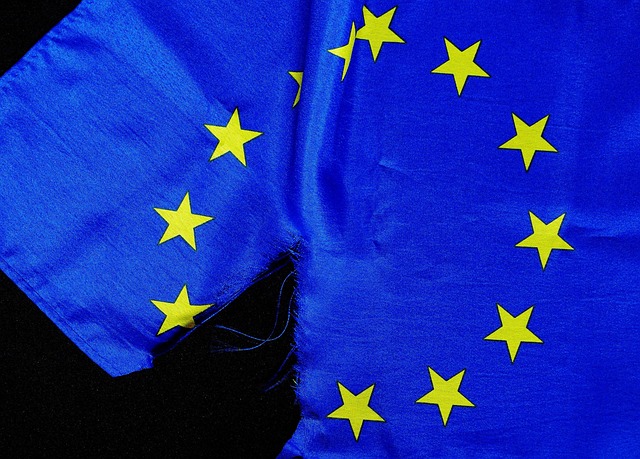
The European Commission, in a comprehensive decade-long effort, has successfully pressured social media platforms to change their global content moderation rules, thereby directly infringing on Americans’ online speech in the United States. Though often framed as combating so-called ‘hate speech’ or ‘disinformation’, the European Commission worked to censor true information and political speech about some of the most important policy debates in recent history—including the COVID-19 pandemic, mass migration, and transgender issues. After ten years, the European Commission has established sufficient control of global online speech to comprehensively suppress narratives that threaten the European Commission’s power. Prior to the Committee’s subpoenas, these efforts largely occurred in secret. Now, the European Commission’s efforts have come to light for the first time, informing the Committee on legislative steps it can take to protect American free speech online.
The above text is not an abstract from some marginal free speech organisation. It is the opening paragraph of the United States House Committee on the Judiciary’s recent report on EU censorship. It sets the tone for 200 or so pages, detailing EU censorship targeting the suppression of democratic debate, interfering with national elections both inside and outside the EU, and maintaining the current EU regime in power.
This report includes 302 documents containing proof that the EU has tried to keep secret many revealing dealings between members of the EU Commission and social media platforms in which the EU explicitly lists subjects which these platforms must censor, together with threats of massive fines for non-compliance.
The report supplies detailed proof of the EU’s direct interference in the national elections of Slovakia, Moldova, the Netherlands, France, Ireland, and Romania as well as in the June 2024 EU parliamentary elections, in each case ensuring that the EU-friendly candidate was elected.
To take the 2024 EU parliamentary elections as just one example from the report:
In this case, the European Commission’s pre-election censorship campaign was particularly problematic because of an inherent conflict of interest: the European Parliament elects the President of the European Commission and confirms the European Commissioners.
In the month before the election, European Commission regulators summoned platforms for at least two meetings about election-specific content moderation measures. ‘At the outset’ of these ‘DSA roundtables,’ the European Commission warned platforms that it was ‘actively monitoring’ them and would not hesitate to ‘take enforcement actions’ if platforms did not sufficiently censor content. With that warning in mind, platforms presented to the European Commission ‘the specific actions and changes that they have made in relation to election readiness and that they are implementing in compliance with the DSA election guidelines.’ Under threat of regulatory retaliation, the world’s largest social media platforms and search engines made ‘specific’ censorship ‘changes’ for the EU elections. They aligned their content moderation rules with the censorious DSA Election Guidelines to suppress content opposing the EU’s ruling regime — which was on the ballot. Moreover, because, platforms’ election content moderation rules generally apply worldwide, these EU-mandated censorship efforts could have resulted in censorship of American speech ahead of the 2024 presidential election.
Over the years, the EU has systematically pretended to promote democratic values, while in secret has made concerted measures to ensure that elections result only in a decision favourable to the EU, by pressuring third parties to do their censorship work for them. The fact that the EU has attempted to cover up the hundreds of exchanges brought to light by the Congress subpoenas indicates beyond doubt that the EU is fully aware that it is deliberately suppressing democracy both within the EU and outside the EU while attempting to present a democratic and freedom-respecting face to the world.
But this EU-wide censorship regime isn’t limited to just elections; it also targets some very familiar subjects specifically. For example, in 2023, while preparing for the Slovakian national elections, EU Commissioners met with the owners of TikTok to decide on a pre-election censorship campaign. Election moderation guidelines were agreed; the following phrases and their authors were to be targeted and suppressed:
- 'There are only two genders’
- ‘Children cannot be trans’
- ‘We need to stop the sexualisation of young people/children’
- I think that LGBTI ideology, gender ideology, transgender ideology are a big threat to Slovakia, just like corruption’
- Targeted misgendering
The EU has focused considerable efforts on suppressing criticism of the Covid crisis, particularly relating to the Covid gene therapies and related injuries. The report states:
During the COVID-19 pandemic, senior European Commission officials pressed platforms to change their content moderation rules to globally censor content questioning established narratives about the virus and the vaccine. With the approval of EU President Ursula von der Leyen and Vice President Vera Jourova, the European Commission asked platforms how they planned to ‘update … [their] terms of service or content moderation practices (promotion / demotion)’ ahead of the rollout of COVID-19 vaccines.
What is particularly interesting about this revelation is that preparations for censorship were being made before even the dangerous gene therapies were being rolled out, thus implying the EU’s foreknowledge of the damages that would be inflicted on the European population, adding weight to the euphemism ‘Covid Plandemic’.
The US Congress were particularly incensed when they discovered that not only was the EU Commission censoring free speech in the EU, but also in the US, in an attempt to prevent embarrassing truths being published in the US which would easily cross the Atlantic and undermine the EU’s Covid propaganda:
This, too, began during the COVID-19 pandemic. In November 2021, the European Commission requested information about how TikTok planned to 'fight disinformation about the COVID-19 vaccination campaign for children starting in the US’, inquiring specifically about TikTok’s plans to ‘remove’ certain ‘claims’ about the efficacy of the COVID-19 vaccine in children.
But the EU’s suppression of free speech in the US wasn’t limited to Covid. It actively intervened in the US elections to try to achieve victory for a pro-EU candidate. The report states:
Most infamously, then-EU Commissioner for Internal Market Thierry Breton sent a letter to X owner Elon Musk in August 2024 ahead of Musk’s interview with President Donald Trump. Breton threatened X with regulatory retaliation under the DSA for hosting a live interview with President Trump in the United States, warning that ‘spillovers’ of U.S. speech into the EU could spur the Commission to adopt retaliatory ‘measures’ against X under the DSA. Breton threatened that the European Commission ‘[would] not hesitate to make full use of [its] toolbox’ to silence this core American political speech.
The EU not only showed its hand by attempting to influence the US election, wanting to install an EU-friendly Harris in the White House, but also, in a stroke, antagonised both Musk and Trump. Accustomed to bullying smaller countries within the EU, it had now taken on an adversary beyond its power. The immense hubris of the EU in suppressing free speech not only in the EU, but across the world far beyond its borders, is astonishing, and it would seem to be that which finally provoked the US to intervene.
The repeated mention of the Digital Services Act (DSA) refers to the principal legal instrument that the EU uses to enforce censorship and suppress freedom of expression. The report describes the background for the creation of the DSA, as well as a raft of other legalistic instruments intended to suppress free speech.
The internet and social media initially promised to be a force that would democratize speech, and with it, political power. This development threatened the established political order, and by the mid-2010s, the political establishments in the United States and Europe sought to counter rising populist movements that questioned deeply unpopular policies such as mass migration. Recognizing that tackling this problem would take several years, starting in 2015 and 2016, the European Commission began creating various forums in which European regulators could meet directly with technology platforms to discuss how and what content should be moderated. Though ostensibly meant to combat ‘misinformation’ and ‘hate speech,’ nonpublic documents produced to the Committee show that for the last ten years, the European Commission has directly pressured platforms to censor lawful, political speech in the European Union and abroad …
Later, in 2022 and right as the DSA was about to take effect, the European Commission updated the 2018 Disinformation Code. Under the new guidelines, platforms had to participate in a Disinformation Code ‘Task Force’, which would meet regularly to discuss platforms’ approach to censoring so-called disinformation. The Task Force broke into six ‘subgroups’ focusing on specific disinformation topics, including fact-checking, elections, and demonetization of conservative news outlets.10 Across all of these subgroups, there were more than 90 meetings between platforms, censorious civil society organizations (CSOs), and European Commission regulators between late 2022 and 2024.
Using the DSA, and its sister regulation DSM, as a basis, and supplemented by a number of regulatory codes, the EU established a complete censorship blanket over the media, only allowing EU-friendly subjects to be published.
In this UK Column article, we examined the US National Security Strategy document published late last year, which openly denounces the EU’s undemocratic behaviour and establishes the restoration of nationality sovereignty in Europe as a core national interest for the US.
From the outset, the EU’s concerted attempts to deny freedom of speech to Europe, and instead install a continent-wide construct of lies and propaganda in order to self-perpetuate its domination of political power and justify a host of ideological policies which could not withstand exposure to the spotlight of truth, was a massive overreach. This is because the policy depended upon a successful global cover-up of censorship. The EU could not afford for any other major country to expose the lies, deceit, and denial of fundamental human rights within the EU. This set the EU on a collision path with the US because the EU required that the US would apply the same amount of censorship on the same subjects and also that the US would turn a blind eye to EU interference in elections. As most of the Western mainstream media belonged to the same managed cartel and was perfectly happy to cover up the EU’s anti-democratic behaviour, the remaining zone of conflict was alternate independent media, in particular social media, such as TikTok, X, Telegram, YouTube, Facebook, and so on. As Congress’ report states:
The internet and social media initially promised to be a force that would democratize speech, and with it, political power. This development threatened the established political order, and by the mid-2010s, the political establishments in the United States and Europe sought to counter rising populist movements that questioned deeply unpopular policies such as mass migration. Recognizing that tackling this problem would take several years, starting in 2015 and 2016, the European Commission began creating various forums in which European regulators could meet directly with technology platforms to discuss how and what content should be moderated. Though ostensibly meant to combat ‘misinformation’ and ‘hate speech,’ nonpublic documents produced to the Committee show that for the last ten years, the European Commission has directly pressured platforms to censor lawful, political speech in the European Union and abroad …
The EU Internet Forum (EUIF), founded in 2015 by the European Commission’s Directorate-General for Migration and Home Affairs (DG-Home), was among the first of these initiatives. By 2023, EUIF published a 'handbook … for use by tech companies when moderating’ lawful, non-violative speech such as:
- 'Populist rhetoric'
- 'Anti-government/anti-EU content'
- 'Anti-elite content'
- 'Political satire'
- 'Anti-migrants and Islamophobic content'
- 'Anti-refugee/immigrant sentiment'
- 'Anti-LGBTIQ … content'
- 'Meme subculture'
- 'Populist rhetoric'
- 'Anti-government/anti-EU content'
- 'Anti-elite content'
- 'Political satire'
- 'Anti-migrants and Islamophobic content'
- 'Anti-refugee/immigrant sentiment'
- 'Anti-LGBTIQ … content'
- 'Meme subculture'
Thus, tech companies, whether within the EU or not, were expected to suppress content that contained anti-EU content, anti-migrant content, anti-LGBTIQ and so on. The Congress Report goes on to explain how EU censorship impacted on the USA and its citizens directly. Most major social media or video sharing platforms are based in the United States and have a single, global set of rules governing what content can or cannot be posted on the site. These rules set the boundaries for what discourse is allowed in the modern town square, making them a key pressure point for regulators seeking narrative control to tighten their grip on political power. Critically, platform content moderation rules are — and effectively must be — global in scope. Country-by-country content moderation is a significant privacy threat, requiring platforms to know and store each user’s specific location every time he or she logs on. In an age where users can freely use virtual private networks (VPNs) to simulate their location and protect their personal information, country-by-country content moderation is also ineffective in addition to creating immense costs for platforms of all sizes. The internet is global, and platforms govern themselves accordingly. That means that when European regulators pressure social media companies to change their content moderation rules, it affects what Americans can say and see online in the United States. European censorship laws affecting content moderation rules are therefore a direct threat to US free speech.
The battle lines were thus drawn up. The EU needed to muzzle the tech giants across the globe, but this infringed directly on the US Constitutional right to freedom of speech. The EU poured oil on the flames by attempting to ban X from broadcasting an interview with Donald Trump, which would present Trump in his own words, rather than as seen through the censored, biased prism of compliant mainstream media.
The US Government was not slow in making its position known on the subject of EU’s suppression of free speech. One year ago, almost to the day, newly elected Vice-President Vance made a speech which shocked EU elites to the core at the 2025 Munich Security Conference.
What is the positive vision that animates this shared security compact that we all believe is so important? I believe deeply that there is no security if you are afraid of the voices, the opinions and the conscience that guide your very own people. Europe faces many challenges, but the crisis this continent faces right now, the crisis I believe we all face together, is one of our own making. If you’re running in fear of your own voters, there is nothing America can do for you. Nor, for that matter, is there anything that you can do for the American people who elected me and elected President Trump.
The threat that I worry the most about vis-à-vis Europe is not Russia, it’s not China, it’s not any other external actor. What I worry about is the threat from within. The retreat of Europe from some of its most fundamental values: values shared with the United States of America.
I was struck that a former European commissioner went on television recently and sounded delighted that the Romanian government had just annulled an entire election. He warned that if things don’t go to plan, the very same thing could happen in Germany too. Now, these cavalier statements are shocking to American ears. For years, we’ve been told that everything we fund and support is in the name of our shared democratic values. Everything from our Ukraine policy to digital censorship is billed as a defence of democracy. But when we see European courts cancelling elections and senior officials threatening to cancel others, we ought to ask whether we’re holding ourselves to an appropriately high standard.
[T]o many of us on the other side of the Atlantic, it looks more and more like old entrenched interests hiding behind ugly Soviet era words like misinformation and disinformation, who simply don’t like the idea that somebody with an alternative viewpoint might express a different opinion or, God forbid, vote a different way, or even worse, win an election.
A year ago, J. D. Vance drove a coach and horses through the complicity, which the EU believed held sway between the US and the EU. The unsayable had been said to the EU elites, and they reacted vociferously at that Munich Conference.
Our focus is on defending freedom, not undermining it.
— Ursula von der Leyen, President of the European Commission
Germany won’t accept people who intervene in our democracy, in our elections, in the democratic formation of opinion … especially from friends and allies.
— Olaf Scholz, Former Chancellor of Germany
The world had to wait for the recent publication of the Congressional report on the EU’s destruction of democratic values to learn definitively whether Vance was justified in his Munich 2025 speech, or whether the EU leaders were right to condemn him. The report reveals beyond any doubt at all that Vance was indeed fully justified in his speech, and that the EU leaders were clearly lying through their teeth about their respect for democratic values and freedom of speech. Through his Munich speech, Vance had boxed the EU into a corner. It could either remain silent and, by its silence, condone his criticism of the EU, or come out and make bare-faced lies, thus making itself a hostage to fortune.
Vance’s Munich speech was followed up by the US National Security Strategy document of November 2025 (examined in this UK Column article), which clearly identified the EU as the greatest problem faced by Europe and that it had to go as a matter of US national interest. This document listed a number of ways in which the US would actively seek to force change on European governance and return sovereignty and democracy to European states.
Although this US/EU conflict started as a war of words in early 2025, it has since spread, and has become a conflict of many moving parts taking in the future of NATO, or, more precisely, the slow dismemberment of NATO, US support for national sovereignty political parties in Europe, the war in Ukraine, tariffs, the sovereignty of Greenland, and expanding conflicts between US tech companies and the EU.
Last November’s NSS document stated: “It is a core interest of the United States to negotiate an expeditious cessation of hostilities in Ukraine”. In juxtaposition, the EU and the UK are stepping up the war with Russia to attempt to protect the loan guarantees made to the IMF and the World Bank, which would be lost if the current de facto split of Ukraine becomes permanent and ratified by a peace treaty, with rump Ukraine remaining an economic basket case. So, for example, the UK Government would be on the hook for $7.6 billion to the World Bank and a further $500 million to the IMF. The EU is in a far deeper hole, with $133 billion of loans that would have to be paid back to the IMF and the World Bank. The only forlorn hope of not having to cough up these vast sums of money is for Ukraine to win the war with Russia and force Russia to pay war reparations, something that clearly will never happen.
The nascent cold war between the US and EU took on a more tangible and Pythonesque appearance over Greenland following President Trump’s various announcements about decoupling Greenland from Denmark (and by association the EU) and attaching it in some way to the US. Denmark assembled a defence force of around 15 German soldiers and four French soldiers to deter a US invasion. These 19 soldiers remained for less than 48 hours before returning home. To cover the embarrassment of this demonstration of the EU’s military determination, there were press releases made which suggested that this was a NATO exercise, but it was never organised by NATO.
The EU now finds itself in an existential struggle. If the US wins, the EU will likely become dismembered. If the EU removes all its censorship and election interference, it will likely be voted out of existence by various nations that have tried to vote for their own sovereignty. The EU’s cancelling of the Romanian presidential election is one that Congress focuses on, stating:
The European Commission took its most aggressive censorship steps during the 2024 Romanian presidential election. In December 2024, Romania’s Constitutional Court annulled the results of the first round of the previous month’s presidential election, won by little-known independent populist candidate Calin Georgescu, after Romanian intelligence services alleged that Russia had covertly supported Georgescu through a coordinated TikTok campaign. Internal TikTok documents produced to the Committee seem to undercut this narrative. In submissions to the European Commission, which used the unproven allegation of Russian interference to investigate TikTok’s content moderation practices, TikTok stated that it ‘had not found, nor been presented with, any evidence of a coordinated network of 25,000 accounts associated with Mr. Georgescu’s campaign’ — the key allegation by the intelligence authorities.
Similar pro-sovereignty movements are clearly in evidence and gaining in popularity across the EU, in Portugal, Slovakia, Hungary, France, Germany, Poland, and, of course, Romania.
But the beleaguered EU is also facing huge centrifugal forces which look like breaking the EU apart due to its own economic incompetence. In this UK Column article, we examined the dire state of French debt, and the intense pressure that the current regime is under, to find a solution. President Macron, having failed to achieve a national budget two years running, is relying on two ways to kick the can down the road. The first is for a raid on private French savings to service, in part, the national debt. Also, recently, Macron made a speech in which he wanted Germany to participate in mutualising France’s national debt; in plain language, he wanted Germany to take on board France’s spiralling national debt, currently at 118% of GDP (expected to be 122% by the end of the year) with an annual deficit of 5%. In the very same conference, German Chancellor Merz shot down the idea with no room for ambiguity. Germany would not take on board any of France’s debt — end of discussion. This leaves the only other option open to Macron: raiding French citizens’ savings. But as Macron’s approval ratings are currently down to 11% and falling, making him the least popular French president in over 50 years, the chances of him being able to survive such an outrageous move politically are highly dubious. With or without Macron, France’s national debt issues, as well as Italy’s, remain unresolved, and may at some point end in an expulsion from the Euro or a sovereign default, provoking an EU-wide banking crisis. The war in Iran looks like it will further degrade the situation for the EU as a whole, which looks highly vulnerable to an economic shock following the closure of the Straits of Hormuz raising the threat of increased inflation, resulting in probable interest rate hikes. The German economy already struggling to stay out of recession could well fall back in. Higher sovereign debt repayments, for Italy and France and likely further debt downgrades, particularly if the Straits of Hormuz remain closed for months, are all on the cards.
Meanwhile, as the US withdraws both from NATO and from the war in Ukraine, the EU has taken up the cries for war against Russia, as predicted in this article. With both France and the UK now actively involved in hostilities, it may just be a question of time before Russia decides to target Paris, London, and Ramstein with a storm of Oreshniks, an act which certain members of the Duma are currently calling for. Indeed, the EU Commission President announced at this year’s Munich Security Conference that she is going to fast-track Ukrainian admission into the EU, which is to be concluded in 2027. Hungary has always opposed this, and has clearly stated that it will veto any such proposition. However, Politico reports that Hungary will have its veto confiscated by the EU on the basis that Hungary doesn’t align itself with core EU values. Thus, it will be a vote of the EU 26, excluding Hungary, that will integrate Ukraine into the EU next year. But worse still, von der Leyen has said that once Ukraine is an EU member, the EU will invoke Article 42 (7) of the European Union Treaty, which will force all member states to declare war on Russia, as a Treaty obligation. This is planned to occur in 2027 and forms part of a larger plan to re-arm the EU and break up Russia. So while the US National Security Strategy document states:
It is a core interest of the United States to negotiate an expeditious cessation of hostilities in Ukraine, in order to stabilize European economies, prevent unintended escalation or expansion of the war, and re-establish strategic stability with Russia, as well as to enable the post-hostilities reconstruction of Ukraine to enable its survival as a viable state …
The EU is actively intending to declare all-out war against Russia next year.
The political alignment between the UK ruling elite and the EU has not gone unnoticed in the US. Keir Starmer declared during last week’s Munich Security Conference that “the Brexit years are over” as he outlined ever closer political ties between the UK and the EU. These ties also include widespread censorship of the media in the UK. The Congressional report states:
Perhaps the most notable foreign attempt to imitate the Digital Services Act has been the United Kingdom’s (UK) Online Safety Act (OSA). Passed in 2023, just a year after DSA, the OSA paves the way for Ofcom, the UK’s relevant regulatory authority, to regulate how social media platforms ‘should deal with [so-called] disinformation and misinformation’. The Committee’s oversight has previously shown that British regulators sought to censor legitimate political speech criticizing the government, including ‘narratives’ about a ‘two-tier’ system of justice in the UK, during large-scale riots in August 2024. British regulators have also used the OSA to threaten American platforms with regulatory retaliation if they do not ‘embed [British] standards’ on topics like ‘hate’ speech into their content moderation policies. Now, Prime Minister Keir Starmer, like European regulators, is threatening to take X offline in the UK using the OSA’s authorities.
Despite the EU ship appearing to be holed below the water line and going down fast, beleaguered on all sides and from within, Keir Starmer, with his talent for picking the wrong side, has firmly nailed his colours to the EU mast. This brings the UK into the crosshairs of the US Administration, alongside the EU.
The UK establishment, just like the EU elite, has also poured oil on the flames of enmity with the US: the BBC, Britain’s state broadcaster, has manipulated news to portray President Trump as having incited the invasion of the White House. As described in this UK Column article:
Just as the X versus EU incident has opened legal hostilities between the US and the EU, then the US President’s lawsuit against the BBC for deliberately and maliciously manipulating the news in order to portray the President as saying something that he didn’t, in a continuation of the BBC’s ideological campaign against the President. At stake is a sum of between $1 billion and $5 billion in damages against the BBC. The political elite in Britain has been put on notice: the US is coming after them.
The latest events in this lawsuit are that the BBC attempted to deploy delaying tactics to the trial, but the trial judge refused the request, and the trial is scheduled for 2027.
Let us be in no doubt about the current situation. In both the EU and the UK, the fundamental right to freedom of expression has been rigorously suppressed, and with it, there is no democracy in either the EU or the UK. This UK Column article details the dependence of freedom itself on the freedom of expression. Laws enacted by either UK or EU parliaments carry no democratic mandate. Unless the current authoritarian regimes in power are replaced, and the anti-democratic structures that they have put in place are entirely dismantled, the current situation, as bad as it already is, will simply get worse. It serves little purpose to simply replace von der Leyen or Starmer with a similar appointee, nor to replace Labour by Conservatives; all the anti-democratic structures will simply remain in place. Every day that people sit on their hands hoping for things to get better allow these structures to become more entrenched, and authoritarianism to become even more extreme.
Marco Rubio, during a keynote speech at the Munich Security Conference, played ‘good cop’ to J. D. Vance’s ‘bad cop’ exactly a year earlier, and made a vaguely veiled reference to this:
In a perfect world, all of these problems and more would be solved by diplomats and strongly worded resolutions. But we do not live in a perfect world, and we cannot continue to allow those who blatantly and openly threaten our citizens and endanger our global stability to shield themselves behind abstractions of international law which they themselves routinely violate.
This is the path that President Trump and the United States has embarked upon. It is the path we ask you here in Europe to join us on. It is a path we have walked together before and hope to walk together again.
And although his tone was generally conciliatory, he described the EU’s foreign policy as “insane”. He also attacked the globalist alignment of Starmer and von der Leyen: “And finally, we can no longer place the so-called global order above the vital interests of our people and our nations”.
Here he echoes the National Security Strategy document published three months earlier, which insists on returning Europe to its nation states, rather than being dominated by an undemocratic EU and supra-national forces.
The conclusion of Vance’s speech, Rubio’s speech, and the National Security Strategy document all point in one direction. The US considers it to be of core national interest to dismantle the EU and restore liberty and democracy to Europe. This is not a flash in the pan policy declaration; it has been at least a year in the making. The EU’s response is to double down on censorship, increased election interference, and the suppression of democracy, while pretending that all is perfectly normal.
Neither side shows any indication of changing direction or backing down. During Macron’s visit to India on 18 February 2026, he made his position clear in a speech to Indian students delivered in vulgar ‘Franglais’ (and in open defiance of France’s Freedom of Speech Law of 1881) stating: “freedom of expression is pure bullshit”. The US has delivered plenty of warnings which have been utterly rejected by the EU, and a clash of some sort may now be inevitable. Given all the existential threats facing the EU, from Ukraine, to its debt crisis, to its internal democracy crisis, to its war with Russia, to the nascent cold war with the US, it would seem probable that the US will, at some point, have its own way in the matter. The big open question facing the UK population is: will the UK persevere on the side of autocracy and oligarchic rule, with the suppression of fundamental freedoms, or will it return to common law principles and join forces with the US?
New political forces are rising in the UK that challenge the uniparty establishment with its pro-EU, pro-globalist stance, and are more likely to respect the Brexit vote, rather than treat it with contempt, and at the same time attempt to repair damaged bridges with the US. But the US has clearly stated that any friendship will be conditional on a return to democratic and traditional western values, which will involve rolling back wide rafts of legislation passed over the last 10 years.
Read the full article at the original website
References:
- https://www.puterea.ro/wp-content/uploads/2026/02/THE-FOREIGN-CENSORSHIP-THREAT-PART-II-2-3-26.pdf?
- https://www.ukcolumn.org/article/the-usa-to-the-rescue-the-implications-of-the-national-security-strategy-document
- https://www.presstv.ir/Detail/2025/10/31/757932/France--Macron-Hollande-Verian-Group?
- https://www.hungarianconservative.com/articles/current/ukraine-eu-accession-five-step-manual-politico-brussels-viktor-orban-hungary-election-2026/?
- https://www.whitehouse.gov/wp-content/uploads/2025/12/2025-National-Security-Strategy.pdf
- https://www.lemonde.fr/en/opinion/article/2025/12/05/trump-wants-to-deal-a-blow-to-the-bbc-by-pressing-on-with-his-lawsuit_6748175_23.html
- https://www.ukcolumn.org/blogs/the-loss-of-freedom-of-speech