
Türkiye: Impeded Access to Mayor’s Trial
(Istanbul, March 23, 2026) – An Istanbul court has imposed arbitrary restrictions on lawyers, journalists, and members of the public seeking to follow the trial of the jailed Istanbul Mayor, Ekrem İmamoğlu, Human Rights Watch said today.
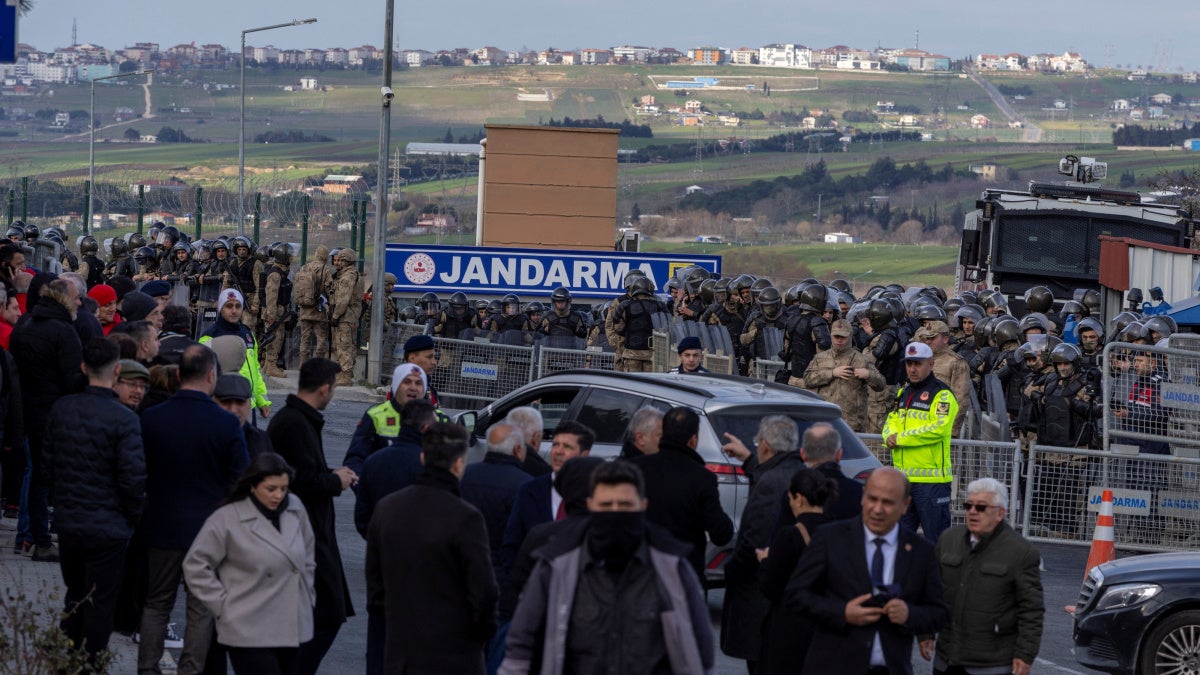
(Istanbul, March 23, 2026) – An Istanbul court has imposed arbitrary restrictions on lawyers, journalists, and members of the public seeking to follow the trial of the jailed Istanbul Mayor, Ekrem İmamoğlu, Human Rights Watch said today. Imamoğlu and 406 municipal officials and others have been on trial since March 9, 2026, facing politically motivated corruption charges. The court should ensure that hearings are open to the public and that reporters are not relegated to the far back corner of the courtroom, where it can be difficult to follow interactions between the defendants and judges. “The fundamental principle that justice must be seen to be done requires access for journalists, lawyers, and the public, especially when elected officials are on trial and the proceedings are of such public interest,” said Benjamin Ward, deputy Europe and Central Asia director at Human Rights Watch. “There is a lot of empty space in the huge courtroom that could and should be used to ensure that journalists observing the case are able to effectively follow the proceedings.” The decisions by the Istanbul 40th Assize Court to increase restrictions followed several tense hearings, which Human Rights Watch representatives observed, marked by disputes about seating arrangements between the court, lawyers, journalists, and politicians from the main opposition Republican People’s Party (CHP), from which İmamoğlu was elected. Two co-defendants Resul Emrah Şahan and Mehmet Murat Çalık, CHP mayors of Istanbul districts Şişli and Beylikdüzü, are expected to present their defense during the week beginning March 23.
The indictment accuses both district mayors as being members of an alleged criminal organization led by İmamoğlu, with Şahan referred to as a “special member.” If the court’s entry restrictions continue, the public will not be permitted to attend their hearings. The hearings are taking place in the Marmara Prison campus courthouse in Istanbul’s most remote district, Silivri, 70 kilometers from the city center. Security arrangements outside the courthouse are strict, with a large presence of gendarmes, barricades, and identity checks at the entrances to the prison campus car park and to the building housing the courtrooms. The courtroom itself is the size of a sports hall with the judges and prosecutor seated at one end, with 107 defendants held in pretrial detention in front of them surrounded by gendarmes, then seating for defendants who are at liberty, with seating for lawyers on raised rows of benches at the sides, and seating for onlookers and the media in a small enclosure at the very back. On March 16, the chief judge postponed the hearing before the session began because three members of parliament from the CHP, who are lawyers and were observing, refused to comply with his order to move from the lawyers’ benches at the front, to the back of the court. The court issued a written order later that day limiting presence in the courtroom to defendants, three lawyers per defendant, one relative per defendant, and media, excluding everyone else from the room. Lawyers not acting for defendants, but wishing to observe the proceedings, were also excluded. The hearings on March 17 and 18 took place with increased security and reduced public presence, with all defendants’ relatives seated at the back and many rows of benches at the sides reserved for lawyers left empty. After a negotiation with the court, several CHP members of parliament were admitted to the back of the court. On March 18, further negotiation resulted in more relatives and opposition party supporters and officials being allowed in, although the wider public and lawyers not acting for defendants were not granted access. On March 12, the chief judge ended a hearing early when journalists did not comply with his order to move from benches reserved for lawyers to the back corner. Following an incident in which a journalist had asked İmamoğlu a question as he was leaving the courtroom, journalists are now only permitted to follow proceedings from the back corner of the courtroom. Journalists have submitted written petitions requesting to be moved back to the empty side benches, citing the difficulty of seeing and hearing the full proceedings from what they described as a “blind spot.” Being seated in the back corner limits what journalists can hear beyond the testimony of individuals in the dock whose words are audible via speakers and who are visible via two large video screens. Off-microphone discussions between defendants and the judges are not audible at the back of the court. Over the past year the Turkish authorities have targeted journalists for their critical reporting on the investigations and court cases against İmamoğlu, other CHP mayors, and lawsuits aimed at removing the leadership of the party.
The journalists should be able to do their work without unnecessary restrictions on their ability to inform the public of all developments in the court, Human Rights Watch said. Under the Turkish Constitution, and in line with the right under international law to a public hearing as part of a fair trial, court hearings are open to the public. A decision to hold part or all of a hearing in private may only be made in cases in which it is strictly required by considerations of public morality or public security. In 2023, the Constitutional Court ruled that public trials are a constitutional requirement, and restrictions on hearings cannot be imposed unless the conditions specified in the constitution are met. Article 6 of the European Convention on Human Rights, to which Türkiye is party, guarantees the right to a fair trial including “a fair and public hearing.” The European Court of Human Rights has confirmed that public access is an important factor in ensuring the right to a fair trial, and while some limitations are permitted, they must be strictly necessary for specific purposes in the interest of justice. Arbitrary restrictions are not permissible. “Imposing arbitrary restrictions on access to this case undermines confidence in the proceedings and violates the requirement under Turkish and international law to conduct justice in public,” Ward said. “Instead of limiting the public’s right to information about the case, the authorities should allow journalists to report fully on proceedings and ensure public access to the trial.”.
Read the full article at the original website
References:
- https://www.hrw.org/news/2026/03/03/turkiye-leading-opponent-of-erdogan-on-trial
- https://www.hrw.org/about/people/benjamin-ward
- https://www.anayasa.gov.tr/tr/haberler/norm-denetimi-basin-duyurulari/aleni-yargilanma-ilkesinin-sinirlanabilmesini-ve-tuketici-hukukunda-dava-sarti-olarak-arabulucuya-basvurulmasini-ongoren-kurallara-iliskin-karar/
- https://rm.coe.int/1680304c4e